
 4.8 Google Rating out of 7K Reviews
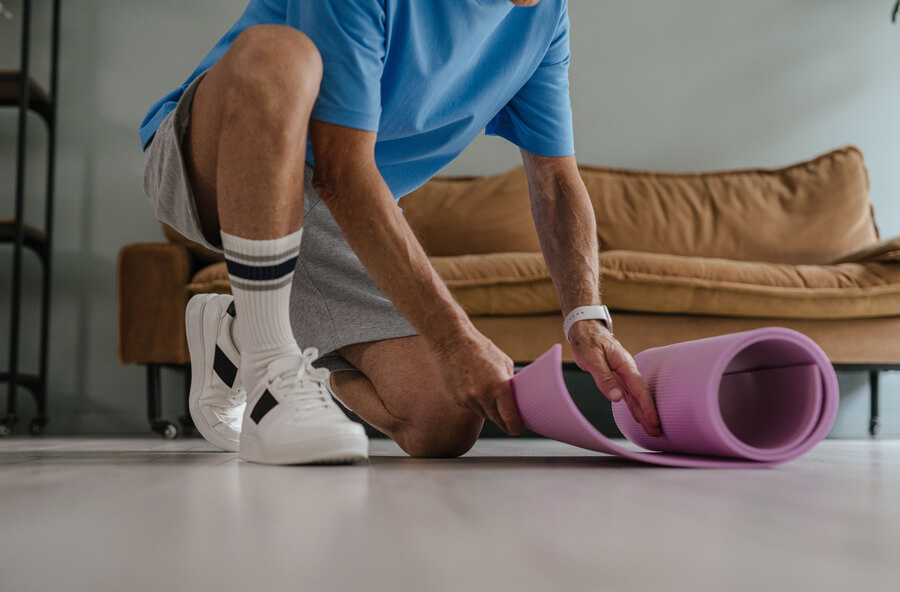
Staying mobile as you get older doesn’t require a gym, special equipment, or a punishing workout. It just requires 10 minutes — and someone who knows how to guide you through it. That someone is Dr. Mary Hill: a Palm patient, a Pilates, yoga, and dance instructor with several decades of experience, and someone who has spent her career helping people of all ages move better.
This routine was filmed in honor of Men’s Health Month, but the movements are designed for everyone. If your goal is to feel more aligned, more fluid, and more energized in your daily life, this is a good place to start.
Why Movement Matters More as You Get Older
Starting around age 60, men naturally experience gradual changes in muscle strength, joint flexibility, and balance. These aren’t signs of failure — they’re normal. But they do mean that staying active becomes more important, not less.
Loss of mobility affects everyday activities: getting up from a chair, walking through the neighborhood, and carrying groceries. The good news is that consistent, gentle movement can meaningfully slow those changes. Dr. Hill’s approach focuses on releasing fascia — the connective tissue that surrounds your muscles — and restoring the fluidity and stability your body is designed to have.
About Dr. Mary Hill
Dr. Mary Hill is a Palm patient and a movement specialist with decades of experience as a Pilates, yoga, and dance instructor. Her approach emphasizes alignment, joint protection, and working with the body’s natural “lines” to improve posture, core strength, and overall fluidity.
What to Expect from This 10-Minute Routine
Everything in this routine is done standing. No equipment needed. No getting on the floor. Dr. Hill works through a series of movement sequences that target different “lines” of the body — releasing fascia and improving mobility from your feet all the way through your spine.
All movements can be modified based on your fitness level or any joint sensitivity. A wall, kitchen sink, or sturdy chair provides all the support you need.
Here’s what the routine covers:
Spinal Sequencing
Using a wall or kitchen sink for support, Dr. Hill guides you through rolling through the spine — starting from the tailbone to open the chest and look upward, then reversing by leading with the chin and moving down to the hips. This sequence improves spinal flexibility, posture, and the kind of core stability that supports everything you do throughout the day.
Foot and Heel Work
Lifting the heels during spinal sequences strengthens and stretches the feet — an often-overlooked factor in balance and stability. Healthy foot mechanics support your entire kinetic chain, from your ankles to your lower back.
Lunges for Length
Modified lunges elongate the back line, psoas, and quads — the muscle groups that tighten most from prolonged sitting. These can be performed in a chair to avoid stress on the knees, hips, or wrists, making them accessible to most fitness levels.
Lateral and Oblique Lines
Exercises that involve displacing the hip or folding the body in sequence (finger-to-shoulder) target the body’s lateral and oblique lines. These movements build the side-body strength and flexibility that support balance and reduce the risk of falls.
Triangle Position
Rotating the front leg while keeping the back foot forward deepens the lateral stretch and improves hip mobility. This position is drawn from yoga but adapted here for accessibility — no floor work required.
How Often Should You Do This Routine?
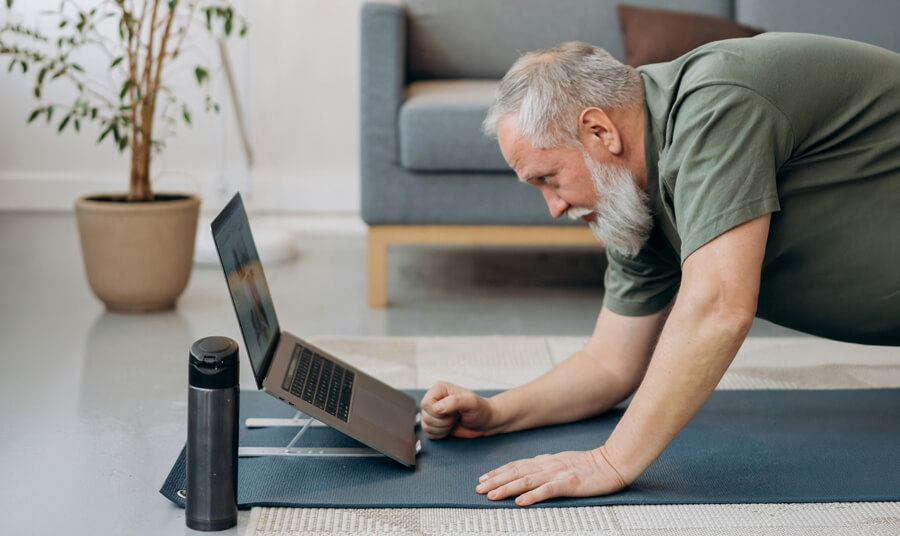
Everyone starts somewhere. If this routine is new to you, begin with once a week — just enough to learn the movements, get comfortable with the sequences, and notice how your body responds. There’s no rush.
From there, gradually build. Add a second session when the first feels easy. Keep going at your own pace until you’re moving through the routine 3 to 5 times a week. That’s the sweet spot where the benefits really compound — improved stability, better posture, more fluidity in your daily life.
And before beginning any new exercise program, check in with your Palm Medical Centers provider, especially if you’re managing a chronic condition or recovering from an injury. We’re here to help you move well and stay safe.
Men’s Health Goes Beyond the Gym
This routine is a meaningful step — but physical activity is one piece of a larger picture. Men’s Health Month is a good reminder that staying well means staying connected to your care.
Regular primary care visits allow your Palm provider to track blood pressure, cholesterol, blood sugar, and weight — and catch anything that needs attention before it becomes a bigger problem. Many Palm Medical Centers patients are enrolled in Medicare Advantage plans that include preventive wellness visits at no additional cost.
If you haven’t scheduled your annual wellness visit yet, this is a good time. Find a Palm Medical Centers location near you (https://palmmedicalcenters.com/locations/) or call us at (833) 500-PALM.
Frequently Asked Questions
Are these exercises safe for men with joint pain or arthritis?
Yes, with some care. Dr. Hill specifically addresses joint protection in the video — for those with wrist discomfort, she recommends pushing with fingertips rather than palms, or holding the edge of a sink instead. All movements are designed to be approached gently to avoid triggering muscle spasms or discomfort. Talk with your Palm provider about any specific modifications.
Do I need any equipment?
No equipment required. A wall, a kitchen sink, or a sturdy chair for light support is all you need. The entire routine fits in a small space at home.
How does staying active support Medicare Advantage preventive care goals?
Many Medicare Advantage plans include wellness benefits that support regular physical activity. Movement routines like this one support blood pressure, weight management, and mobility — all areas your annual wellness visit will review. Ask your Palm provider how your activity level connects to your broader care plan.
Can I do this routine every day?
Yes. Because these movements focus on gentle fascial release and mobility rather than high-load strength training, most men can do this daily without needing recovery days. Listen to your body — if something feels sore or off, ease back.
Your Health Is Worth 10 Minutes
Palm Medical Centers is here to support every part of your health — from movement to primary care. Schedule your visit today.







Leave a Reply