
 4.8 Google Rating out of 7K Reviews

Your provider already knows that your blood pressure tends to run a little high in the mornings, that penicillin gives you a rash, and that the knee pain you mentioned last spring turned out to be nothing serious. That kind of knowledge doesn’t come from a five-minute intake form. It comes from seeing the same provider, visit after visit, year after year.
That’s continuity of care: seeing the same provider or care team over time, instead of a different provider at every visit. It’s easy to overlook, but it matters more than most people realize — especially as you get older.
Below, we’ll explain what continuity of care looks like in practice, why it matters more with age, and what it looks like for patients at Palm Medical Centers.
What Is Continuity of Care?
Continuity of care simply means sticking with the same primary care provider (PCP) or care team, rather than starting over with someone new every time you need care.
Think about what your provider already knows if you’ve been seeing them for a few years: your medication list, your allergies, your family history, and what’s “normal” for you versus what’s a real change worth looking into. A new provider has to learn all of that from scratch, usually in the fifteen minutes of a first visit. A provider who already knows you can skip straight to what matters.

Why It Matters More As You Get Older
Managing your health tends to get more complicated with age. It’s common to be managing more than one chronic condition — high blood pressure and diabetes, say, or arthritis and heart disease — often with several medications working together. A provider who has followed your health over time is in a much better position to notice a subtle change: a little more fatigue than usual, a memory lapse, a change in how you’re walking. Signals like that are much easier to catch when someone already knows your baseline.
There’s real research behind this. A 2018 review published in BMJ Open examined 22 studies from nine countries and found that in 18 of them, patients with higher continuity of care — meaning they consistently saw the same provider — had significantly lower mortality rates. The researchers were careful to note that this evidence is observational, not proof that continuity alone extends anyone’s life. But it’s a meaningful signal that your relationship with your provider isn’t just about comfort. It’s connected to real health outcomes. (Source: BMJ Open, via PubMed)
Continuity also means fewer things fall through the cracks. When you see a rotating cast of providers, it’s easy for a specialist’s note to get lost, a test to get repeated because no one saw the last result, or a medication change to go unnoticed by your primary provider. A consistent care team catches those gaps before they become problems.
How a Consistent Care Team Helps During Enrollment Season
Every fall, Medicare’s Annual Enrollment Period brings a wave of options: new plans, new premiums, new extra benefits. It’s smart to look — and if you’re helping a parent compare plans this year, that instinct to shop around makes sense.
But here’s the part that’s easy to miss: switching your Medicare Advantage plan can sometimes mean switching your provider, too, if your current provider isn’t in the new plan’s network. Before you switch for a lower premium or a new benefit, it’s worth checking whether your current care team is included. A plan that saves you thirty dollars a month isn’t much of a deal if it means starting over with someone who doesn’t know your history.
For a full rundown of what’s changing this enrollment season and a step-by-step look at what to check on your current plan, see our Annual Enrollment Period overview and enrollment checklist.
What Continuity of Care Looks Like at Palm Medical Centers
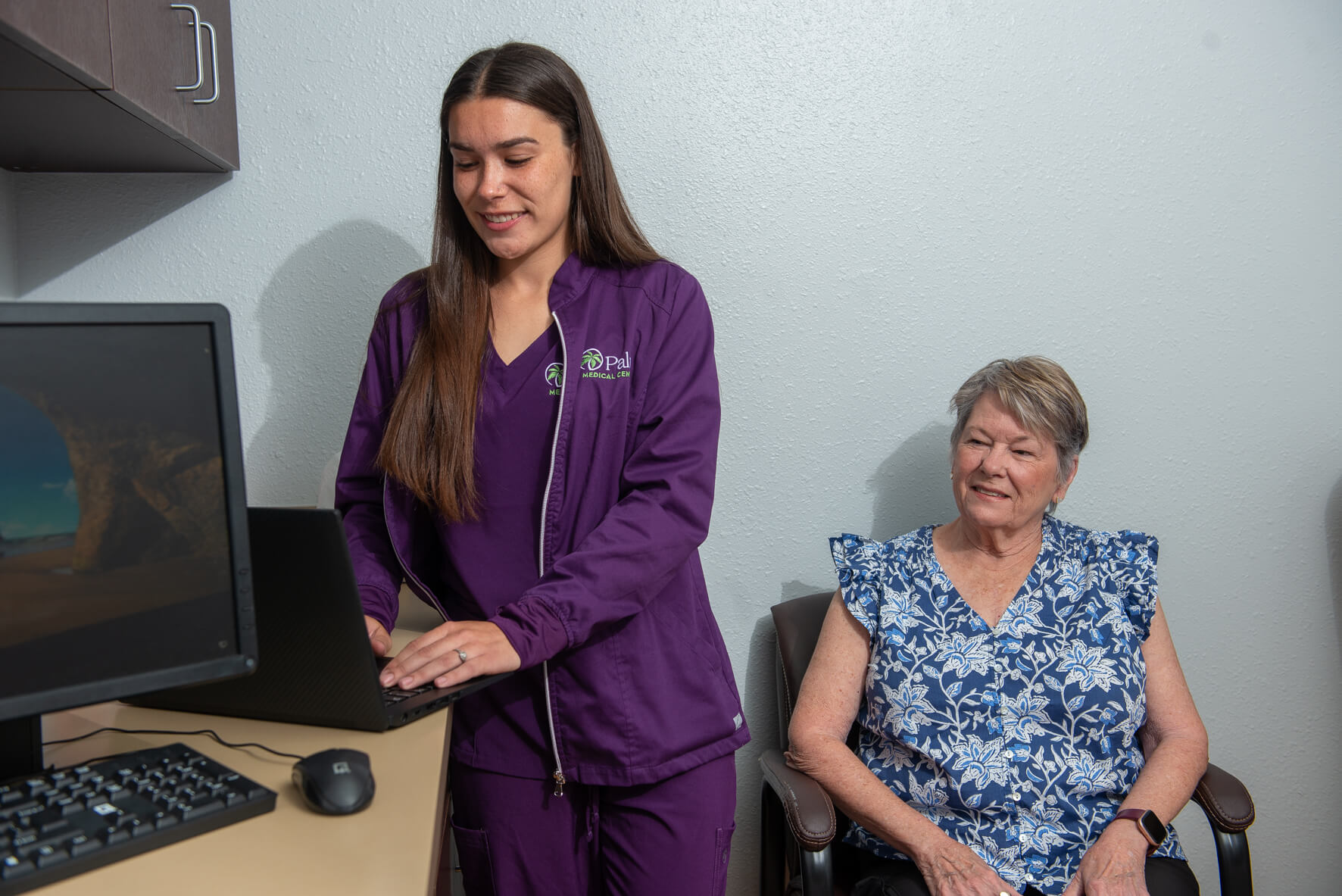
At Palm Medical Centers, continuity of care isn’t an abstract idea. It’s built into how we work. Patients see a consistent primary care team rather than a rotating set of providers, so the person examining you today is often the same person who saw you three visits ago.
When you need to see a specialist, Palm works with a preferred network of specialists that your provider already knows and trusts. That relationship makes it easy to get your test results back to your primary care team, and it means your provider and your specialist can talk directly about your care, instead of leaving you to carry information back and forth yourself.
Signs It’s Worth a Conversation With Your Care Team (Not a New Provider)
Sometimes something feels off: a longer wait than usual, a scheduling mix-up, a question that didn’t get answered the way you’d hoped. That’s frustrating, and it’s worth raising. But it’s usually a reason to talk directly with your care team, not necessarily a reason to start over somewhere new.
A quick conversation can often resolve what’s bothering you without losing the years of history your provider already has. If something isn’t working, tell us. We’d rather fix it than have you leave.

Frequently Asked Questions
Why is continuity of care important?
Continuity of care means fewer things get missed, health changes get caught earlier, and your provider makes decisions with your full history in mind instead of a five-minute chart review. Research has linked it to better management of chronic conditions and, in long-term studies, lower mortality rates.
Will switching my Medicare Advantage plan mean I have to switch providers?
Not necessarily, but it depends on whether your current provider is in the new plan’s network. Before you switch plans, check the plan’s provider directory, connect with your outreach representative, or call your provider’s office directly to confirm they’re still in-network, and make a final decision.
Does seeing a specialist break continuity of care?
No. Continuity of care doesn’t mean you only ever see one person. It means your primary care provider stays involved and coordinated even when you see a specialist. At Palm, your primary care team helps manage referrals so nothing gets lost between visits.
How do I make sure I can keep seeing my Palm provider if I change plans?
Call your Palm Medical Centers location directly before making a change, or ask your agent to confirm the network status for the specific plan you’re considering. It’s a five-minute call that can save you the hassle of starting over with someone new.
Already a Palm patient and thinking about a change this enrollment season?
Talk to your care team first. Call us at (833) 500-PALM, or find your nearest location before you decide.







Leave a Reply